Subtotal $0.00


Resources




Lightning Protection
You need to protect both the input (120-volt source) and the output (fence) side of the energizer.
Studies have shown that the majority of damage is caused by surges from the utility side.
There are two options for the input side. One is a power surge protector (MPS). The power surge protector is a simple device that goes between the plug and the receptacle. Another option is to replace the original plug with a fused plug. This fused plug (MFP) has two internal fuses that can be easily replaced if a problem occurs.
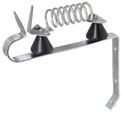
Now for the output side. This is the side that usually takes the blunt force of a lightning strike to the fence line. Because lightning seeks ground by the path of least resistance, it is important to find a route to the ground other than through your energizer. A lightning diverter (MWLA), located between the lightning strike and the energizer, should minimize any damage. The lightning diverter consists of a spark gap and a choke coil. The lightning will be bottlenecked at the choke coil and is forced through the spark gap and down into the lightning diverter ground bed. Be sure to connect the top hot wire of your fence to the lightning diverter. The lightning arrestor and its ground bed should be at least forty feet from your energizer's ground bed as well as any other existing home or utility grounds, water supply systems, or milking systems. It should have as many ground rods as the energizer, preferably one more.
For those of you who don't want to leave anything to chance, there are several styles of disconnect switches (MCP, MCCHD) that can be used to further isolate your fence from your energizer during lightning storms. This is mounted at a convenient location near your energizer's lead out wires. Before a storm approaches, open the switch, which will isolate the lead wires from the fence and ground bed, and unplug the energizer from the 120-volt power source. Of course, you must be there to do this. But short of a direct lightning strike to your energizer, it will be protected.
Lightning strikes can be quite severe and damaging. We make no claim to be able to completely prevent damage. However, the lightning protection measures discussed above could mean the difference between a low-cost repair or total replacement of the energizer. For the best protection, unplug the energizer and disconnect it from the fence before severe storms.
Related Items
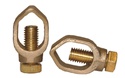

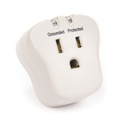
- Protects energizer from surges coming from main electrical source
- Status indicator lights
- Economical protection
- Bear Fence
- Charger Troubleshooting Diagram
- Fence Troubleshooting Diagram
- Fencing By Remote Control
- Grounding
- Lightning Diverter
- Lightning Protection
- Solar Panel Calculator
- Stafix Electric Fencing Manual
- Volts vs. Joules